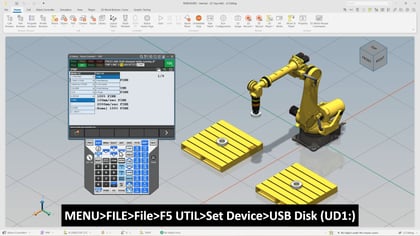
How to Remote Start a Robot using the OTHER Method (Part 2)
Part 2 of a series; learn to utilize the User Operator Panel Inputs and Outputs (UOP I/O) to control the robot remotely (ex: from a PLC).
In this tech short, we’ll walk through the updated naming convention introduced with the R-50iA controller for FANUC robots. This new system is designed to make it easier to understand key robot specifications at a glance, while also supporting future scalability across FANUC’s growing lineup.
We’ll explore how the naming structure has evolved to include more meaningful identifiers, helping users quickly determine a robot’s payload, reach, mounting options, generation, and even its intended application. Whether you're configuring a new system or upgrading an existing one, this overview will help you navigate the changes with confidence.
The video also highlights how certain robot families are being reclassified under the new convention, streamlining the way we refer to models like the ArcMate, LR Mate, and DR series. You’ll see examples of how legacy names compare to the new format, and what to expect on updated robot nameplates.
In this video, we’ll go over:
You’ll learn:
Part 2 of a series; learn to utilize the User Operator Panel Inputs and Outputs (UOP I/O) to control the robot remotely (ex: from a PLC).
Part 1 of a series; learn to utilize the User Operator Panel Inputs and Outputs (UOP I/O) to control the robot remotely (ex: from a PLC).
Boost automation with Python on FANUC R-50iA controllers. Learn script execution, data handling, and integration tips for robotics workflows.
Set up and use Python remote debugging on FANUC R-50iA controllers with VS Code for efficient script development and troubleshooting.
Learn how to set up a photoelectric sensor for FANUC’s S627 TCP calibration, including wiring, IO config, and teach pendant setup
How to route cables and hoses from the J3 arm connections to the End of Arm Tooling on the unique LR Mate/25 series (formerly known as M-20iB series).