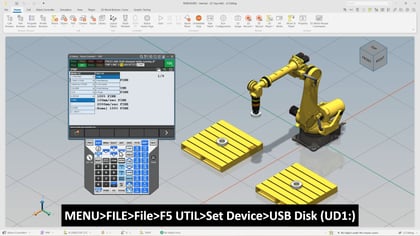
How to Remote Start a Robot using the OTHER Method (Part 2)
Part 2 of a series; learn to utilize the User Operator Panel Inputs and Outputs (UOP I/O) to control the robot remotely (ex: from a PLC).
The video discusses the concept of robot duty as the amount of input into the system over time, resulting in movement and heat. It emphasizes the importance of focusing on each axis' duty and using a motion profiler to determine estimated duty numbers for the robot to verify the robot is not being over utilized. The video highlights the importance of verifying the robot’s duty to ensure the robot will last. Additionally, it highlights the impact of programmatic changes, such as reducing speed or torque spikes, payload changes, or cell design on duty values. Overall, the video provides insights into reducing robot duty through various adjustments and changes.
Part 2 of a series; learn to utilize the User Operator Panel Inputs and Outputs (UOP I/O) to control the robot remotely (ex: from a PLC).
Part 1 of a series; learn to utilize the User Operator Panel Inputs and Outputs (UOP I/O) to control the robot remotely (ex: from a PLC).
Boost automation with Python on FANUC R-50iA controllers. Learn script execution, data handling, and integration tips for robotics workflows.
Set up and use Python remote debugging on FANUC R-50iA controllers with VS Code for efficient script development and troubleshooting.
Learn how to set up a photoelectric sensor for FANUC’s S627 TCP calibration, including wiring, IO config, and teach pendant setup
How to route cables and hoses from the J3 arm connections to the End of Arm Tooling on the unique LR Mate/25 series (formerly known as M-20iB series).